
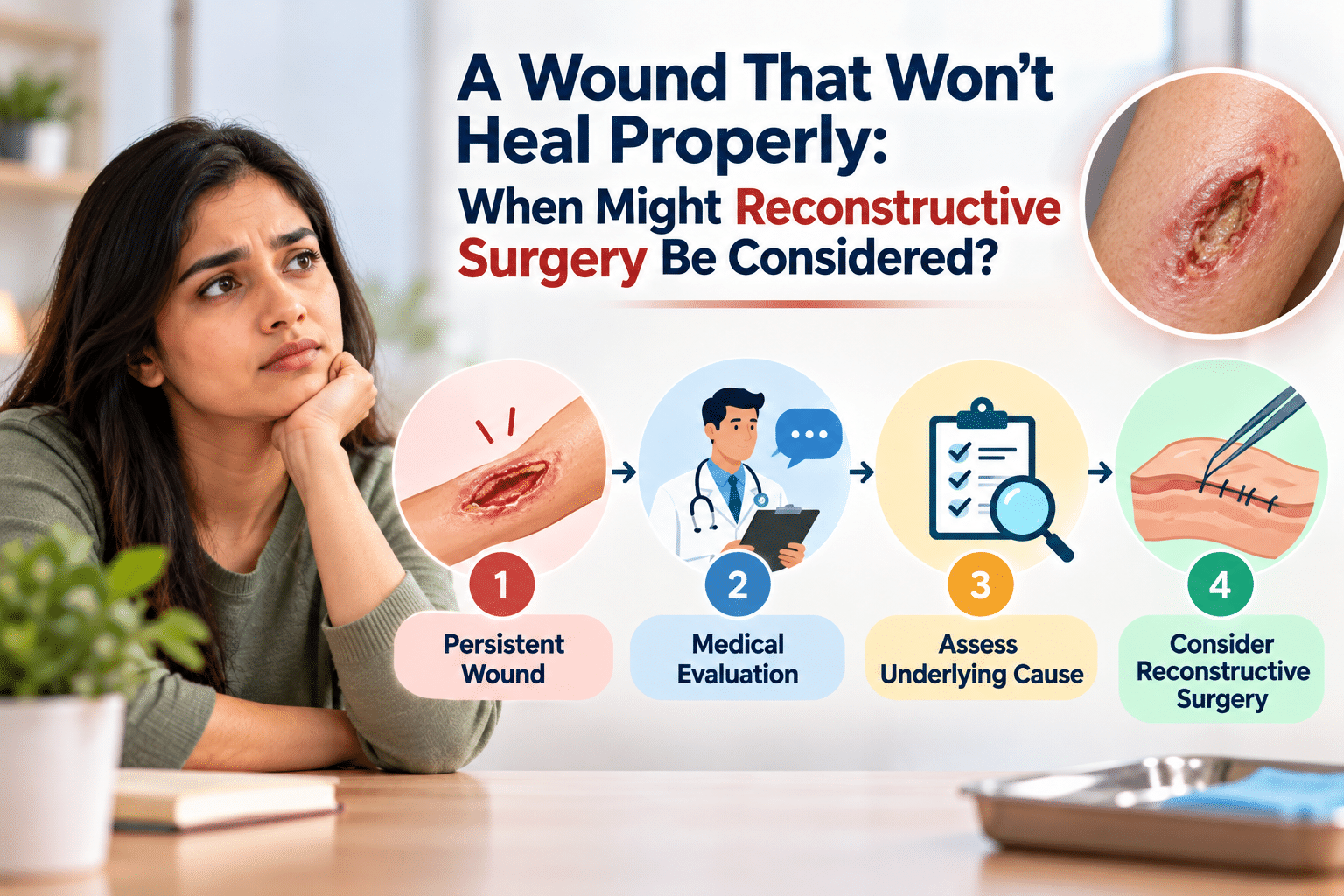
A small injury usually improves gradually with appropriate care. But what happens when a wound remains open, repeatedly breaks down, or becomes deeper despite treatment? Delayed healing can interfere with walking, working, sleeping, and everyday comfort. It may also signal an underlying problem that dressings alone cannot resolve.
People searching for Best Plastic Surgeon In Punjab often wonder whether an operation is necessary for a stubborn wound. Reconstructive surgery is one possible option, not the automatic next step. The decision depends on the wound’s cause, size, depth, circulation, infection status, and the person’s overall health.
When Is a Wound Considered Slow to Heal?
Healing time varies according to the injury and the individual. A superficial cut may close quickly, while a deep wound needs longer. Concern grows when a wound stops getting smaller, develops unhealthy tissue, or repeatedly opens after appearing to improve.
Clinicians look at measurable progress rather than a fixed number of days alone. They may record wound dimensions, drainage, surrounding skin changes, and pain levels over several visits. Photographs taken consistently can also help the care team see whether the wound is changing between appointments. These records are particularly useful when several professionals share responsibility for treatment. A non healing wound treatment plan should respond to these observations instead of repeating the same dressing indefinitely.
Why Some Wounds Remain Open
Poor circulation can prevent oxygen and nutrients from reaching damaged tissue. Diabetes may affect blood flow, sensation, and resistance to infection. Persistent pressure, swelling, infection, or repeated friction can also interrupt healing.
Other contributors include inadequate nutrition, smoking, certain medicines, and tissue damaged by earlier surgery or radiation. Sometimes several problems occur together.
A careful assessment identifies which factors are treatable. Closing a wound surgically without addressing the underlying cause can increase the risk of another breakdown. This is why a thorough chronic wound management approach begins with diagnosis, not simply choosing a procedure. For example, a foot ulcer caused by repeated pressure may reopen unless footwear and weight distribution are addressed, even after successful closure.
Signs That Require Prompt Medical Assessment
Increasing redness, warmth, swelling, pus, unpleasant drainage, or worsening pain can indicate infection. Fever, rapidly spreading redness, or feeling seriously unwell requires urgent assessment. Blackening tissue, sudden severe pain, or a cold, pale limb may suggest a circulation emergency.
A wound that exposes tendon, bone, or another important structure also needs timely professional evaluation. People with diabetes or reduced sensation should not wait for pain before seeking help, because serious injury may be relatively painless.
Avoid applying harsh chemicals or unverified remedies to an open wound. They can irritate tissue and delay appropriate care.
What Happens Before Surgery Is Considered?
A clinician examines the wound and asks how it began, how long it has been present, and which treatments have already been tried. Blood tests, circulation studies, or imaging may be recommended depending on the findings. Sometimes a tissue sample is needed when a wound has unusual features or an unclear cause.
Treatment may involve appropriate dressings, pressure relief, swelling control, management of infection, and removal of dead tissue. Blood glucose and nutritional needs may also require attention.
Effective chronic wound management aims to create conditions in which the body can heal. Surgery becomes more relevant when these measures are insufficient or the wound cannot close safely on its own.
When Might Reconstructive Surgery Help?
Reconstruction may be considered for large wounds, significant skin loss after injury or burns, or defects remaining after an operation. It can also be useful when repeated healing attempts fail despite appropriate treatment.
Wounds over joints or weight-bearing areas may need durable coverage to protect movement and reduce repeated injury. Exposed tendons, bone, or important blood vessels can require specialised tissue coverage rather than ordinary dressings.
Someone seeking Best Plastic Surgeon In Punjab should ask what problem reconstruction is intended to solve. The goal may be protection, restored function, reliable closure, or a combination of these outcomes.
Skin Grafts and Tissue Flaps: What’s Different?
A skin graft transfers skin from one body area to another. It depends on a healthy, well-supplied wound bed to establish circulation and survive. Grafts may suit certain broad wounds once infection and unhealthy tissue have been addressed.
A flap transfers tissue with its own blood supply. Depending on the situation, tissue may be moved from nearby or transferred from another area using specialised techniques. Flaps can help cover deeper defects or exposed structures that a simple graft cannot protect.
Choosing between skin graft surgery and reconstructive flap surgery depends on anatomy, circulation, wound depth, and functional needs. Neither technique is appropriate for every patient. The location of a donor site, the amount of available healthy tissue, and the need to preserve movement can all influence the choice. Patients should understand why one approach is preferred.
Why Wound Preparation Matters
Successful reconstruction begins before the operation. Infection needs evaluation and treatment, dead tissue may require removal, and adequate blood supply must be confirmed. Where pressure or friction caused the original injury, a plan to reduce those forces is essential.
Clinicians may also address blood glucose control, nutrition, smoking, and other conditions that affect healing. A poorly prepared wound can lead to graft failure, flap complications, or reopening after closure.
Preparation may take time, but rushing to cover unhealthy tissue can create further problems. Ask how the team will judge whether the wound is ready for reconstruction.
Recovery Is More Than Closing the Skin
After surgery, dressings and follow-up appointments help protect the repaired area. Some patients need to limit movement or pressure temporarily, particularly when the wound lies on a foot, leg, or joint. The exact instructions depend on the operation and location.
A graft donor site also needs care. Flaps may require close monitoring of circulation, especially soon after complex procedures. Rehabilitation can help restore mobility and everyday function when appropriate.
Both skin graft surgery and reconstructive flap surgery carry risks, including infection, tissue loss, and delayed healing. Discuss expected recovery, restrictions, and possible alternatives before consenting.
Questions to Ask During a Consultation
Ask why the wound is not healing, which nonoperative treatments remain available, and what evidence supports reconstruction. Find out whether circulation or infection requires additional treatment first. Discuss the likely benefits, risks, follow-up schedule, and what could cause the wound to reopen.
When evaluating Best Plastic Surgeon In Punjab, focus on appropriate qualifications, experience with similar wounds, clear explanations, and coordinated care. A responsible assessment should explain when surgery is unnecessary as well as when it may help.
Conclusion
A wound that refuses to heal deserves careful investigation, but not every persistent wound requires an operation. Diabetes, poor circulation, pressure, infection, and other underlying factors may need treatment before reliable closure is possible.
For people researching Best Plastic Surgeon In Punjab, the important question is whether reconstruction offers a meaningful benefit after thorough assessment. A personalised non healing wound treatment plan may include advanced wound care, pressure relief, or surgery when simpler methods cannot provide safe coverage.
Seek urgent care for rapidly worsening infection or compromised circulation rather than waiting for a routine appointment. Early evaluation, realistic expectations, and consistent follow-up offer the best foundation for protecting the repaired area and supporting long-term recovery.