

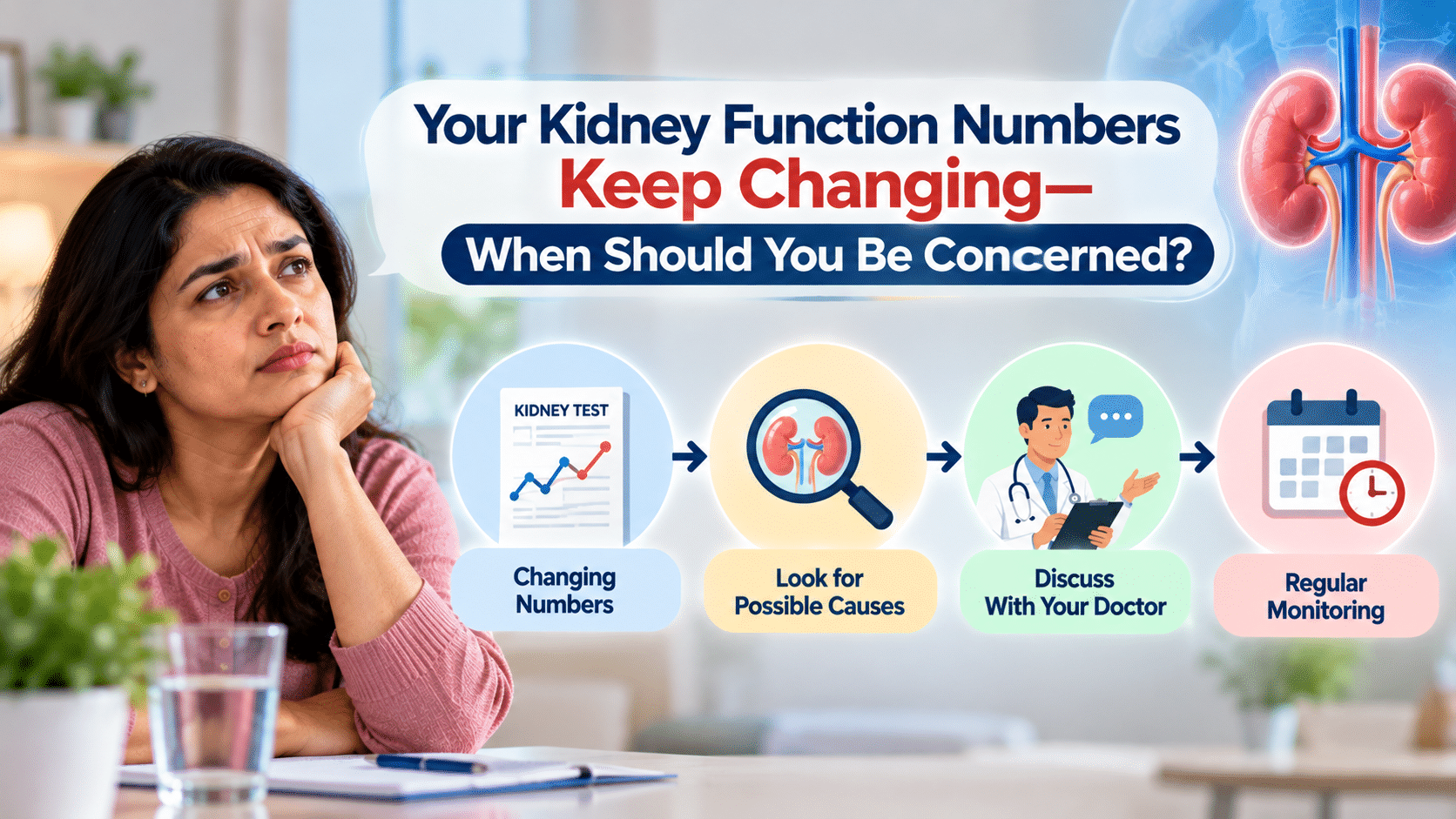
You open your latest blood report and notice that your creatinine has risen. A month earlier, it was lower. Your estimated kidney filtration rate has also changed. Does this mean your kidneys are failing, or could the difference be temporary? Fluctuating results can be confusing, especially when you feel perfectly well.
People looking for a kidney specialist in patiala often want to understand whether changing numbers indicate a serious problem. The answer depends on the size of the change, how quickly it happened, previous results, urine findings, and your overall health. One result rarely tells the entire story.
What Do Kidney Function Tests Actually Measure?
Creatinine is a waste substance made by your muscles as they work normally. Healthy kidneys remove much of it from the bloodstream. A blood test measures its concentration, while an estimated glomerular filtration rate, or eGFR, uses creatinine alongside factors such as age and sex to estimate kidney filtration.
These values are related but not identical. When creatinine rises, the calculated eGFR often falls. Neither number perfectly measures kidney health in every individual. Understanding creatinine level fluctuations requires looking at the circumstances surrounding the test, not just comparing two figures.
Why Numbers Can Change Between Tests
Hydration, recent intense exercise, muscle mass, and eating a large portion of cooked meat before testing can influence creatinine measurements. Certain medicines may also affect creatinine levels or how the kidneys function. Normal laboratory variation can produce smaller differences.
However, changes should not automatically be blamed on dehydration or diet. Illness, reduced blood flow to the kidneys, urinary obstruction, and other medical problems can cause meaningful deterioration.
A careful kidney function test interpretation considers the size and direction of the change alongside symptoms, blood pressure, medicines, and recent illness. Repeating a test may be appropriate, but the timing should reflect clinical urgency.
Understand the Difference Between Sudden and Long-Term Changes
A rapid increase in creatinine over hours or days can indicate acute kidney injury. This deserves prompt assessment because some causes are reversible when treated early. A gradual decline lasting months may suggest chronic kidney disease, although diagnosis requires appropriate evidence over time.
Clinicians generally consider chronic kidney disease when abnormalities of kidney structure or function persist for at least three months. A single reduced eGFR does not necessarily establish that diagnosis.
If results have changed sharply, do not wait several months to seek advice. A kidney specialist in patiala can help investigate whether the pattern suggests a temporary disturbance or an ongoing condition.
Why Urine Tests Matter Alongside Blood Reports
Blood tests tell only part of the story. A urine albumin-to-creatinine ratio can detect albumin leaking into urine, which may indicate kidney damage even when eGFR appears relatively preserved. Urinalysis may reveal blood or other findings that need investigation.
A clinician may request repeat urine testing because fever, exercise, or temporary illness can affect some results. Looking at both blood and urine measurements gives a more complete picture.
For reliable kidney function test interpretation, ask whether urine albumin has been measured and whether any abnormality needs confirmation.
Pay Attention to the Trend, Not One Number
Two reports taken under different conditions may not be directly comparable. Clinicians look for patterns across several measurements, particularly when values approach important clinical thresholds or change more than expected.
Bring older reports to appointments, including results from other laboratories. Record dates, recent illnesses, and medication changes. This helps distinguish a stable personal baseline from a meaningful decline.
Tracking creatinine level fluctuations is useful, but repeatedly testing without medical guidance can increase anxiety without improving care. Ask when another test is needed and what change would prompt action.
What If Your eGFR Is Just Below Normal?
An eGFR slightly below a laboratory reference range is not automatically proof of kidney disease. Age, muscle characteristics, and measurement uncertainty can affect interpretation. A clinician may consider cystatin C testing in selected cases when a creatinine-based estimate is uncertain. The presence or absence of urine albumin and other signs of kidney damage also matters.
Ask whether the finding has persisted and what it means for you.
Conditions That Increase the Need for Monitoring
Diabetes and high blood pressure are important risk factors for kidney disease. Heart conditions, recurrent urinary problems, a family history of kidney disease, and previous kidney injury may also increase concern.
People with these risks may need regular blood pressure checks, kidney blood tests, and urine albumin testing. The schedule depends on their individual circumstances.
Seeking a kidney specialist in patiala may be appropriate when kidney results continue worsening, urine tests show significant abnormalities, or the cause remains uncertain. Referral decisions should reflect the complete clinical picture.
Medicines and Supplements Deserve a Review
Some pain relievers, particularly nonsteroidal anti-inflammatory medicines, can harm kidney function in susceptible people. Other prescriptions may require dose adjustments when filtration changes. Certain medicines can cause a small initial creatinine change while still providing long-term benefits in appropriately selected patients.
Never stop blood pressure, diabetes, or heart medicines solely because a report looks different. Instead, share every prescription, supplement, and over-the-counter product with your clinician.
A thorough kidney health monitoring plan includes reviewing medicine safety and checking whether any new treatment coincided with the laboratory change.
Symptoms That Need Urgent Medical Attention
Seek prompt medical assessment for substantially reduced urine output, new significant swelling, persistent vomiting, or rapidly worsening weakness. Severe breathlessness, chest pain, confusion, or fainting require emergency care. These symptoms may indicate serious complications, whether or not a recent test appeared normal.
Kidney problems can also progress without noticeable symptoms. Feeling well should not be the only reason to ignore a clearly abnormal or rapidly changing report.
If you receive a critical laboratory result, follow the reporting clinician’s instructions immediately rather than waiting for a routine appointment.
Small Steps That Support Kidney Health
Follow advice for controlling blood pressure and blood glucose when relevant. Avoid unnecessary use of kidney-risk medicines, stay appropriately hydrated, and discuss dietary changes before adopting restrictive plans. Fluid and nutrition advice should reflect your individual condition.
What Should You Ask at Your Next Appointment?
Ask what your usual baseline is and whether the latest difference is clinically significant. Find out whether urine albumin testing, repeat blood work, imaging, or medication adjustments are appropriate. Discuss how blood pressure, diabetes, hydration, and other conditions affect your results.
Clarify the follow-up schedule and which warning signs require earlier assessment. Good kidney health monitoring provides a plan rather than leaving you to interpret isolated numbers yourself.
Conclusion
Changing kidney numbers do not always mean permanent damage. Hydration, laboratory variation, medicines, and temporary illness can affect results. Yet a rapid rise in creatinine, persistent reduction in eGFR, or abnormal urine findings should never be dismissed without appropriate assessment.
If you are considering a kidney specialist in patiala, bring previous reports and a complete medicine list. Understanding creatinine level fluctuations, obtaining appropriate kidney function test interpretation, and following a personalised kidney health monitoring plan can help identify problems early.
The most important question is not whether one number changed, but why it changed, how quickly, and what should happen next. Timely follow-up protects your health better than either panic or delay.