

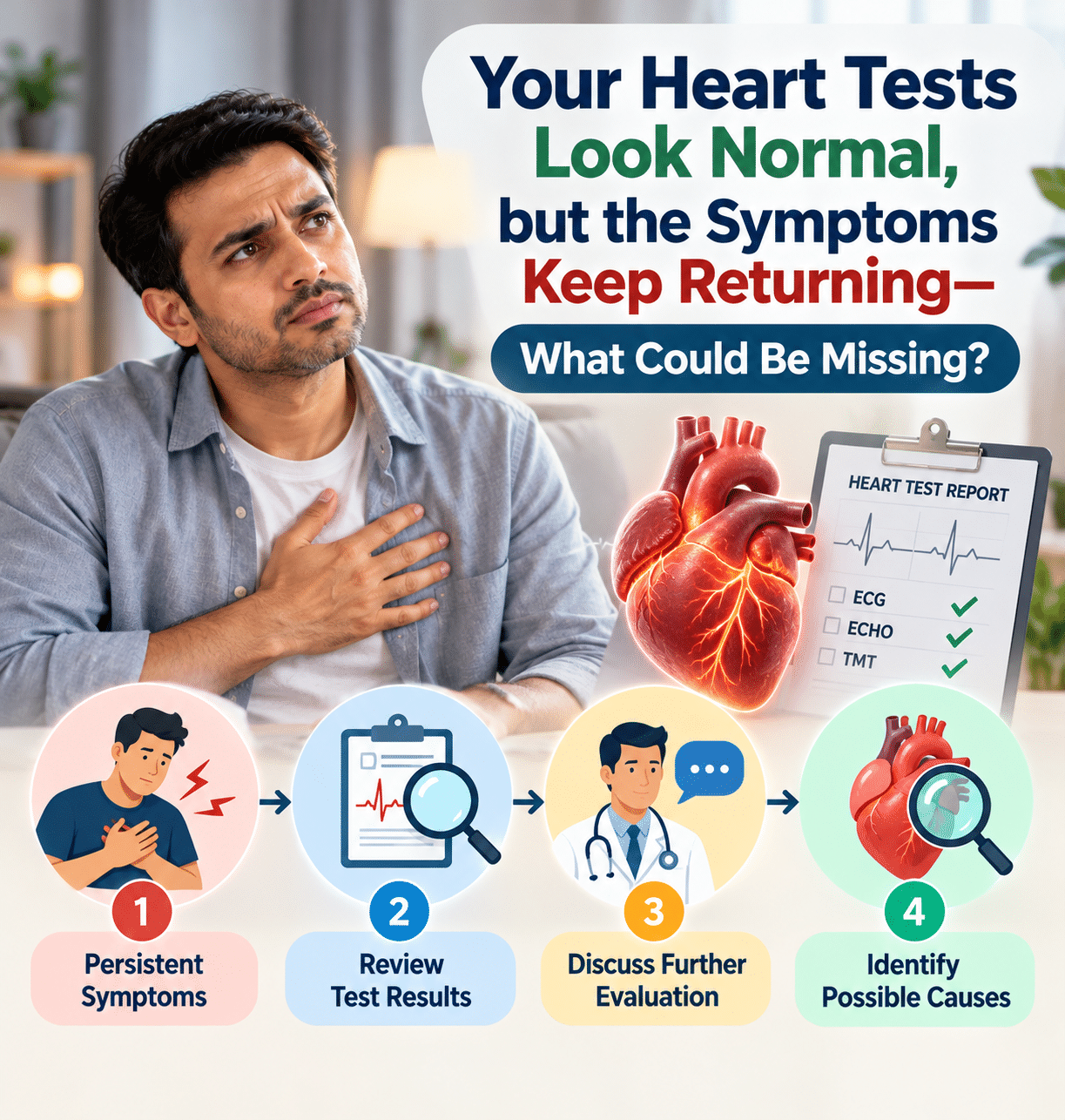
You experience chest discomfort, a racing heartbeat, dizziness, or unexpected breathlessness. Concerned about your heart, you undergo medical tests, but the results appear normal. For a while, you feel reassured. Then the symptoms return, leaving you wondering whether something important was overlooked.
People searching for Best Cardiologist In Punjab often face this uncertainty. Normal test results can be encouraging, but they do not always explain recurring symptoms. Understanding what each investigation measures, recognising symptom patterns, and arranging appropriate follow-up can help identify the next steps without unnecessary panic.
Why Normal Heart Tests Do Not Explain Everything
Normal heart test results can provide reassurance, but they do not always explain why symptoms continue returning. Different cardiac investigations examine different aspects of heart health. An electrocardiogram records electrical activity, while an echocardiogram evaluates heart structure, valves, and pumping function. Blood tests can help identify certain types of heart muscle injury.
However, some cardiovascular problems develop intermittently or become noticeable only during physical activity. A routine examination performed when symptoms are absent may not detect these changes. Therefore, normal results should be interpreted alongside medical history, symptoms, and individual risk factors.
A detailed cardiac symptoms evaluation considers the frequency, duration, severity, and possible triggers of recurring discomfort. People searching for Best Cardiologist In Punjab should understand that further investigations depend on clinical findings rather than assumptions.
Additional monitoring may sometimes help identify abnormalities that earlier examinations could not capture. A personalized cardiac symptoms evaluation supports appropriate decisions without unnecessary testing.
Intermittent Heart Rhythm Problems May Be Missed
An irregular heartbeat does not always occur continuously. Some individuals experience sudden episodes of rapid, slow, or uneven heartbeats that disappear within minutes. When these episodes stop before an examination, routine electrocardiogram results may appear normal.
This makes irregular heartbeat diagnosis challenging, particularly when symptoms occur unpredictably. Depending on their frequency, clinicians may recommend Holter monitoring, event recording, or longer-term rhythm assessment.
Keeping a symptom diary can support irregular heartbeat diagnosis by documenting episode timing, duration, associated dizziness, and possible triggers.
Individuals experiencing recurring heart palpitations should also mention caffeine intake, medication changes, sleep patterns, and physical activity during consultations.
Anyone considering Best Cardiologist In Punjab should prioritise appropriate monitoring and careful investigation rather than assuming every episode indicates serious disease.
Chest Discomfort Can Have Different Causes
Chest discomfort does not always originate from the heart. Acid reflux, muscle strain, chest wall inflammation, and certain respiratory conditions can produce sensations that resemble cardiac symptoms.
Nevertheless, it is unsafe to assume recurring discomfort is harmless simply because earlier tests were reassuring. Some cardiovascular conditions require investigations selected according to the patient’s symptoms and risk factors.
People considering Best Cardiologist In Punjab should describe exactly where discomfort occurs, how long it lasts, and whether physical activity triggers it. These details can help distinguish possible explanations and determine whether additional testing is appropriate.
Symptoms During Exercise Deserve Attention
A resting examination provides information about the heart under relatively calm conditions. However, certain problems become more noticeable during physical activity, when the heart requires additional oxygen and must work harder.
Chest pressure, unusual breathlessness, dizziness, or reduced exercise tolerance may require further evaluation. Depending on individual circumstances, clinicians may consider exercise-based testing or other investigations.
Do not deliberately push through concerning symptoms to see whether they disappear. Stop the activity and seek medical advice. If symptoms are severe or suggest a medical emergency, obtain immediate care rather than waiting for a routine appointment.
Blood Pressure Changes May Explain Some Episodes
Blood pressure can fluctuate throughout the day. Some people experience dizziness when standing, while others develop symptoms during episodes of unusually high or low blood pressure.
A single normal measurement does not necessarily represent every situation. Your clinician may recommend home monitoring, measurements taken in different positions, or ambulatory blood pressure monitoring.
A detailed cardiac symptoms evaluation may also consider hydration, medication effects, and conditions affecting blood pressure regulation. Keep accurate records rather than changing prescribed medicines independently.
Stress and Anxiety Can Produce Physical Symptoms
Stress can trigger a faster heartbeat, chest tightness, sweating, and changes in breathing. These sensations are genuine physical experiences, even when investigations do not identify a structural heart problem.
However, anxiety should not automatically become the explanation for unexplained symptoms. Medical causes need appropriate consideration, particularly when episodes are new, worsening, or associated with warning signs.
Once serious conditions have been assessed, stress management and breathing techniques may help some individuals. A balanced approach acknowledges the connection between emotional and physical health without dismissing persistent concerns.
Medicines and Everyday Habits May Contribute
Certain medicines, stimulants, and supplements can influence heart rate or blood pressure. Caffeine, nicotine, dehydration, inadequate sleep, and some over-the-counter products may contribute to palpitations in susceptible individuals.
During an appointment, provide a complete list of prescribed medicines, supplements, and frequently used products. Explain whether symptoms began after any recent changes.
Identifying recurring heart palpitations sometimes requires examining daily routines alongside medical findings. Avoid stopping prescribed treatment without professional guidance, because sudden changes can create additional health risks.
Keep a Record of Your Symptoms
A symptom diary can provide information that a short consultation cannot capture. Record when an episode begins, how long it lasts, what you were doing, and whether other symptoms occurred.
Note possible triggers such as exercise, meals, emotional stress, or changes in posture. If you use a wearable device, discuss relevant recordings with your clinician, while remembering that consumer devices cannot replace medical assessment.
For irregular heartbeat diagnosis, the relationship between symptoms and recorded heart rhythm can be particularly valuable. Accurate observations help clinicians select investigations more effectively.
Know When Immediate Medical Attention Is Necessary
Some symptoms should never be managed through routine follow-up alone. Seek emergency medical care for severe or persistent chest pain, especially when accompanied by breathlessness, sweating, nausea, or discomfort spreading to the arm, jaw, or back.
Fainting, severe difficulty breathing, or sudden neurological symptoms also require urgent assessment. Do not drive yourself when experiencing a possible cardiac emergency.
Even if previous investigations were normal, new or significantly worsening symptoms deserve fresh evaluation. Earlier reassuring results cannot guarantee that a new medical problem has not developed.
What Should Happen at Your Next Appointment?
Bring previous reports, medication details, and your symptom diary. Explain how frequently episodes occur and whether their intensity has changed.
Ask what the completed tests ruled out, what remains uncertain, and whether additional monitoring is appropriate. Discuss personal risk factors such as diabetes, high blood pressure, smoking, and family history.
When researching Best Cardiologist In Punjab, prioritise careful assessment, clear communication, and an individualised investigation plan rather than expecting one test to provide every answer.
Conclusion
Normal cardiac reports are encouraging, but persistent symptoms deserve proper attention. Chest discomfort, dizziness, breathlessness, and recurring heart palpitations may arise from intermittent rhythm disturbances, blood pressure changes, or noncardiac conditions.
People researching Best Cardiologist In Punjab should seek an individualised cardiac symptoms evaluation that considers previous reports, medical history, and current concerns.
When necessary, additional monitoring can support irregular heartbeat diagnosis and help determine suitable treatment options.
Maintaining accurate symptom records, following medical recommendations, and attending scheduled appointments can improve understanding of recurring problems.
Seek emergency care for severe chest pain, fainting, or significant breathing difficulties, even when earlier tests were normal. Timely assessment and consistent follow-up remain essential for protecting long-term cardiovascular health.