

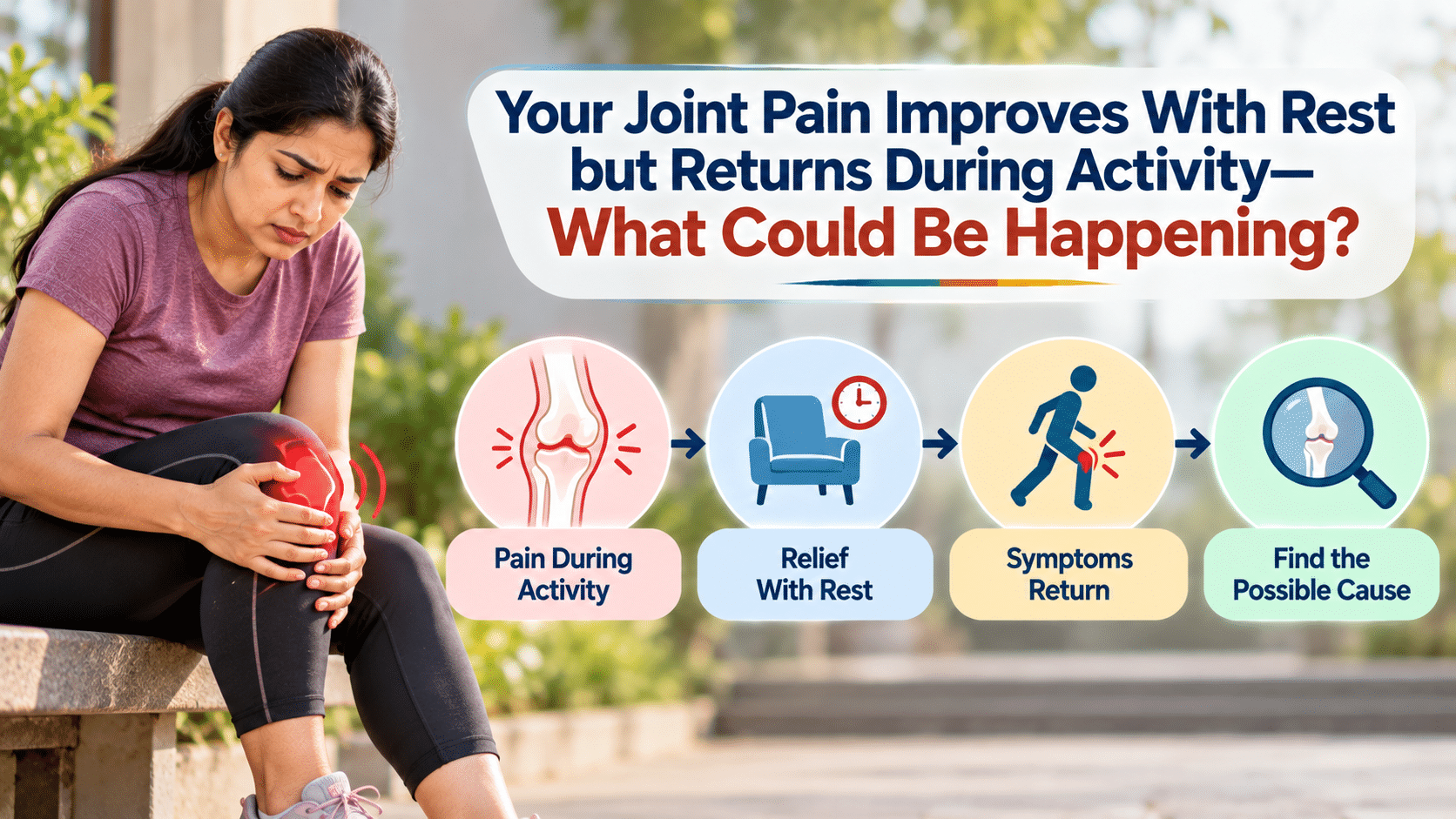
You sit down after walking and your knee finally feels comfortable. Yet the pain returns when you climb stairs, carry groceries, or stand for another hour. This pattern can be frustrating because rest seems to solve the problem only temporarily. Pain that improves with rest but returns during movement may reflect how a joint responds to load, although several conditions can cause it.
People searching for the best orthopedic doctor in patiala often want to know whether the discomfort means arthritis, an old injury, or something else. Understanding the pattern is the first step toward choosing appropriate care.
Why Activity Can Trigger Joint Pain
Joints contain cartilage, bone, ligaments, tendons, and surrounding muscles that work together during movement. Walking, bending, and lifting place forces on these structures. When tissue is irritated or damaged, those forces may produce pain that settles once the activity stops.
This is sometimes called mechanical pain, but the description is not a diagnosis. The location, duration, swelling, stiffness, and history of injury all matter. A thorough joint pain during movement assessment looks beyond the fact that exercise hurts and explores exactly which actions reproduce the symptoms.
Could Osteoarthritis Be Responsible?
Osteoarthritis is one common explanation, particularly in knees, hips, and hands. Changes involving cartilage and other joint tissues can make weight-bearing activities uncomfortable. People may notice brief stiffness after sitting, reduced flexibility, or grinding sensations during movement.
Symptoms do not always match the appearance of an X-ray. Some people have visible changes with little discomfort, while others report substantial limitations. An early signs of osteoarthritis discussion should therefore include symptoms and physical examination, not imaging alone.
Osteoarthritis can gradually worsen, but many people improve their comfort and function through appropriate nonoperative care.
Tendons and Surrounding Tissues Can Hurt Too
Not every painful movement originates inside the joint. Tendons connect muscles to bones, and repetitive activity can irritate them. Pain may develop around the shoulder, elbow, knee, or ankle, especially after a sudden increase in exercise or repetitive work.
Bursae, which help reduce friction near certain joints, can also become irritated. These problems may feel similar to arthritis, but treatment can differ. A clinician may examine the precise tender area and test specific movements to identify the likely source.
Effective orthopedic joint pain treatment starts by distinguishing joint disease from nearby soft-tissue problems.
Previous Injuries May Change How a Joint Moves
An old ligament injury, meniscus problem, or fracture can affect joint stability or load distribution long after the original event. Some people feel discomfort only when turning, squatting, or walking on uneven ground. Others notice catching, locking, or a sensation that the joint may give way.
Tell your clinician about injuries even if they occurred years ago. Describe any recent twist, fall, or change in exercise routine. Someone considering the best orthopedic doctor in patiala should seek an assessment that connects current symptoms with previous injuries rather than assuming every painful joint has arthritis.
The Timing of Stiffness Offers Useful Clues
A joint that feels stiff after resting but loosens within a short period may fit a mechanical pattern. Prolonged morning stiffness, warmth, and swelling can suggest an inflammatory condition requiring a different evaluation.
Pain that appears after several hours of activity may also differ from pain that starts immediately with the first step. Keep track of how long stiffness lasts and whether more than one joint is affected.
Recognising early signs of osteoarthritis is useful, but similar symptoms can occur with other disorders. The complete pattern matters more than any single clue. For example, symptoms involving several small joints, prolonged morning stiffness, or unexplained fatigue may lead the clinician to consider inflammatory arthritis rather than ordinary mechanical strain. Accurate descriptions can prevent delays in selecting suitable investigations.
When Should You Seek Medical Assessment?
Arrange an appointment when pain repeatedly limits walking, work, sleep, or ordinary activities. Persistent swelling, reduced range of motion, repeated instability, or symptoms that worsen despite sensible activity changes also deserve assessment.
Seek urgent care for a hot, severely painful swollen joint, particularly with fever, or if you cannot bear weight after an injury. Sudden deformity or loss of normal circulation or sensation also requires immediate attention.
Do not assume that relief with rest rules out a significant problem. A joint pain during movement pattern can still require timely investigation.
What Happens During an Orthopedic Evaluation?
The clinician will ask where pain begins, which movements trigger it, and whether swelling, stiffness, or injury accompanied its onset. Examination may assess tenderness, joint alignment, movement, strength, and stability. Sometimes the way you walk provides useful information.
X-rays can show certain bone and joint changes, while ultrasound or MRI may be considered for selected soft-tissue concerns. Blood tests may help investigate inflammatory or other causes when clinically indicated. Not everyone needs advanced imaging.
A sensible orthopedic joint pain treatment plan follows the examination findings rather than relying on scans alone.
Why Complete Rest Is Not Always the Answer
Short periods of reduced activity may calm a painful flare, but prolonged inactivity can weaken supporting muscles and increase stiffness. For many nonurgent joint conditions, carefully selected movement helps preserve strength and function.
You may need to temporarily reduce running, jumping, heavy lifting, or repeated deep bending. Lower-impact activities and gradual strengthening can sometimes be introduced under professional guidance. The right approach depends on the diagnosis and severity.
Avoid forcing painful exercises. The aim is to find a sustainable activity level, not to push through worsening symptoms. If discomfort increases after a new exercise routine, discuss adjusting its intensity, duration, or frequency instead of abandoning all movement.
Everyday Changes That May Reduce Discomfort
Supportive footwear, pacing demanding tasks, and taking short movement breaks can help some people. Weight management may reduce stress on weight-bearing joints when appropriate. Physiotherapy can address muscle weakness, movement patterns, and flexibility.
Pain medicines or other treatments may be considered after reviewing medical history and potential side effects. Surgery is not automatically necessary simply because discomfort returns with activity.
When looking for the best orthopedic doctor in patiala, ask about realistic treatment goals and how progress will be measured over time.
Questions to Bring to Your Appointment
Ask which structures may be causing pain and whether symptoms suggest arthritis, tendon irritation, or an injury. Find out which activities are safe, what changes to try first, and when follow-up is needed.
Also ask what warning signs should prompt earlier review. A clear plan makes it easier to stay active without ignoring important symptoms.
Conclusion
Joint pain that improves with rest but returns during physical activity should never be ignored, especially when it begins affecting mobility, work, or everyday comfort. Conditions such as osteoarthritis, tendon inflammation, previous injuries, and joint instability may contribute to recurring discomfort. Identifying the underlying cause is essential for preventing further complications and maintaining long-term joint health.
For individuals searching for the best orthopedic doctor in patiala, a detailed medical assessment can help determine whether symptoms result from joint degeneration, soft-tissue irritation, or another musculoskeletal condition. Understanding joint pain during movement allows patients to recognise potential triggers and seek appropriate treatment before symptoms become increasingly restrictive.
Recognising the early signs of osteoarthritis, including stiffness, reduced flexibility, and discomfort during weight-bearing activities, can encourage timely medical evaluation. Depending on the diagnosis, personalised orthopedic joint pain treatment may involve physiotherapy, strengthening exercises, activity modifications, medication, or other interventions.
Maintaining a healthy weight, following suitable exercise routines, and avoiding excessive joint strain can also support mobility and recovery.
Ultimately, consulting the best orthopedic doctor in patiala can help patients understand their symptoms and explore appropriate treatment options. Early assessment and consistent follow-up remain important for protecting joint function and improving everyday comfort.