

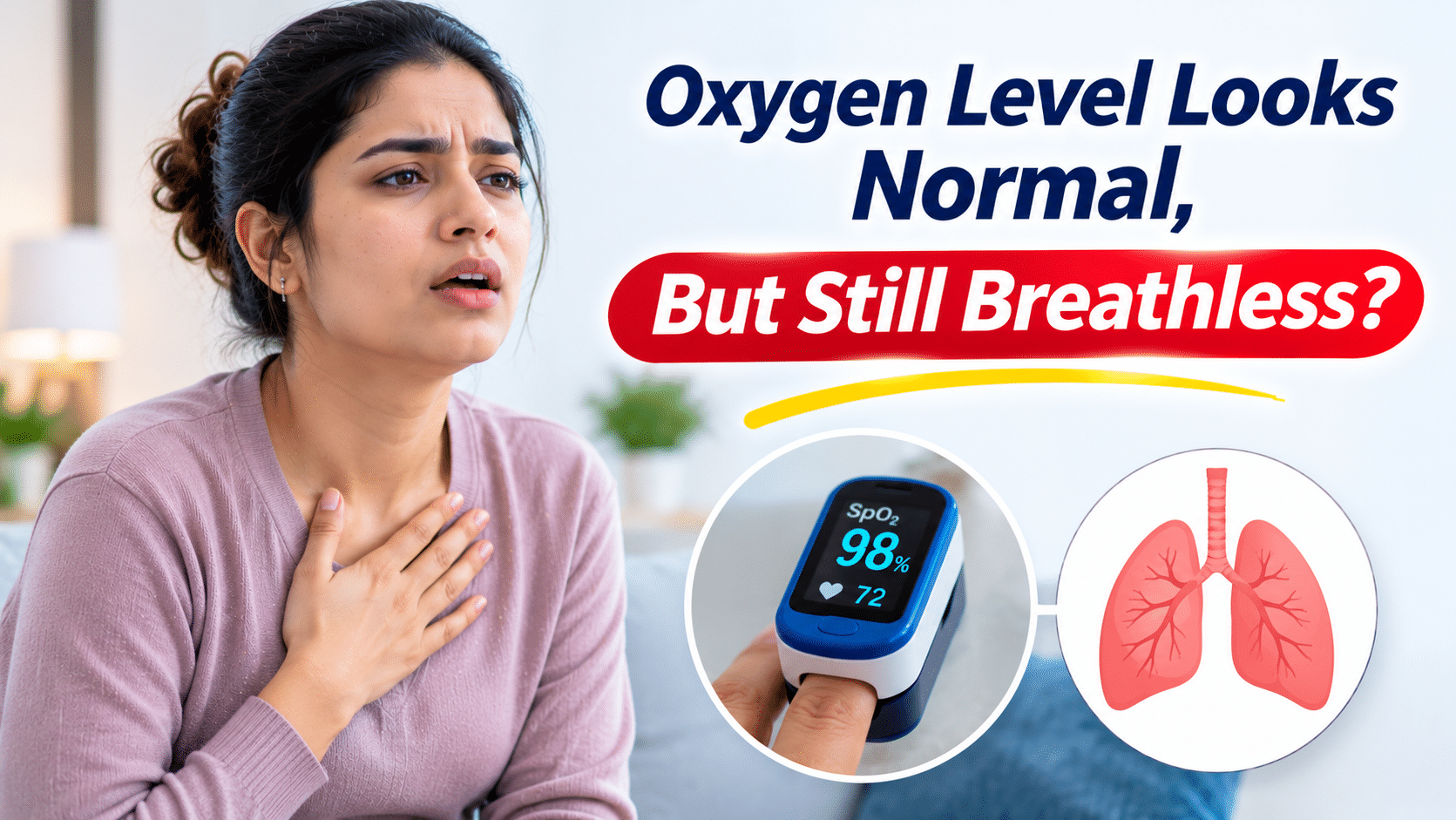
A normal oxygen reading does not always mean breathing is comfortable or that the lungs and heart are functioning normally. A pulse oximeter estimates oxygen saturation, not the effort required to breathe. A Pulmonology Specialist in Patiala can assess persistent breathlessness by reviewing symptoms, examination findings and appropriate tests rather than relying on one number.
Why Can You Feel Breathless With Normal Oxygen?
Breathlessness is the sensation that breathing requires more effort or that you cannot get enough air. Oxygen saturation measures something different: the percentage of haemoglobin carrying oxygen in your blood.
You may breathe rapidly, use extra chest muscles or feel chest tightness while your oxygen saturation remains within an expected range. The reading cannot reveal every problem affecting airflow, breathing mechanics or circulation.
Understanding shortness of breath causes, requires looking at when symptoms begin, how long they last and whether they occur during rest or activity.
Can Asthma Cause This Feeling?
Yes. Asthma can narrow the airways and make breathing uncomfortable even when a pulse oximeter shows a normal reading, particularly during milder episodes.
Wheezing, coughing, chest tightness and symptoms triggered by dust, exercise or cold air may provide useful clues. However, these symptoms are not exclusive to asthma.
A clinician may recommend lung function tests, such as spirometry, to assess airflow. Results are interpreted alongside symptoms and medical history rather than used alone to establish every diagnosis.
Could Your Heart Be Involved?
Sometimes breathlessness originates from a heart or circulation problem rather than a primary lung condition. Some people notice symptoms while walking, climbing stairs or lying flat.
A normal oxygen saturation reading does not exclude heart-related causes. Depending on the examination, clinicians may consider an electrocardiogram, blood tests or heart imaging.
A Pulmonology Specialist in Patiala may recommend further assessment or coordination with another specialty when symptoms suggest a non-respiratory cause. Breathlessness deserves careful evaluation instead of assuming that a normal oxygen reading proves the heart is healthy.
Can Anaemia Make You Breathless?
Yes. Anaemia can reduce the amount of haemoglobin available to transport oxygen around the body. A pulse oximeter measures the proportion of haemoglobin saturated with oxygen, not how much haemoglobin you have.
This means the displayed percentage may look normal even when oxygen-carrying capacity is reduced. Fatigue, weakness or dizziness may accompany the breathlessness, although symptoms vary.
A blood test can help check for this. Anaemia is only one of several shortness of breath causes, so self-diagnosis based on tiredness is unreliable.
Can Anxiety Affect Breathing?
Anxiety or panic can change breathing patterns and produce a feeling of air hunger, chest tightness or rapid breathing. Oxygen saturation may remain normal during these episodes.
However, anxiety should not be assumed to be the explanation simply because a reading looks reassuring. Lung disease, heart problems and other conditions can produce overlapping symptoms.
A medical assessment is particularly important when breathlessness is new, persistent, worsening or associated with other concerning signs. Emotional and physical factors can also occur together.
Can the Oximeter Miss a Problem?
A pulse oximeter reading has limitations. Movement, cold fingers, poor blood flow, nail polish, and the quality of the device can affect the accuracy of the reading. Some devices may show higher oxygen levels than the actual levels in people with darker skin.
Oximeters also do not directly measure carbon dioxide levels, ventilation or the work of breathing. A reassuring number therefore cannot replace an examination.
What Should You Check?
Sit still, warm your hand if necessary and follow the device instructions. Observe whether the reading stabilises, but do not repeatedly test instead of seeking help when symptoms are concerning.
What Tests Might Be Needed?
The right tests depend on the pattern and severity of symptoms. Clinicians may listen to the chest, assess breathing rate, check vital signs and review medical history.
Possible investigations include lung function tests, chest imaging, blood counts or tests assessing heart function. Some people need measurements during activity because symptoms do not occur while resting.
The goal is to identify an explanation, not to order every test for every patient. A clear description of what triggers your symptoms can make the evaluation more focused.
What If Breathlessness Happens While Walking?
Symptoms during activity may reveal limitations that are not obvious when sitting quietly. Note whether breathlessness starts after a few steps, during stairs or only with strenuous exercise.
Also record any cough, wheeze, chest discomfort or palpitations. Do not deliberately push through severe symptoms to test your limits.
For patients seeking a Pulmonology Specialist in Patiala, explaining changes in everyday activities can be as important as sharing a home oxygen reading.
What Could Happen in a Real Situation?
Imagine a hypothetical office worker in Patiala who feels breathless when climbing stairs. A home oximeter repeatedly shows 98%, so the person assumes nothing is wrong.
During a consultation, the clinician asks about symptoms, smoking exposure, recent illness and exercise tolerance. Examination and selected investigations help determine whether an airway problem, anaemia, heart condition or another factor needs attention.
No diagnosis can be made from this example. It illustrates why a normal pulse oximeter reading should be considered alongside the patient’s experience rather than used to dismiss symptoms.
When Should You Get Urgent Help?
Seek emergency care for sudden or severe breathlessness, chest pain, fainting, blue or grey lips, new confusion or difficulty speaking because of breathing trouble. These symptoms can indicate a serious condition even if a device shows a normal number.
New breathlessness with one-sided leg swelling, coughing blood or rapidly worsening symptoms also needs urgent assessment.
For persistent but non-emergency symptoms, arrange a timely appointment. Information about local care can be found through the hospital’s website, although the appropriate service depends on your symptoms.
Conclusion
Feeling breathless despite a normal oxygen reading is possible because oxygen saturation captures only one aspect of breathing and circulation. Airway narrowing, anaemia, heart conditions, breathing patterns and measurement limitations may all contribute, but none can be diagnosed from symptoms alone.
A Pulmonology Specialist in Patiala can evaluate the full picture and decide whether further assessment is needed. Seek urgent help for severe or sudden symptoms, and arrange medical advice for ongoing breathlessness rather than relying solely on a reassuring device display.
Frequently Asked Questions
1. Is 98% Oxygen Always Safe?
No. A normal pulse oximeter reading cannot exclude all serious causes of breathlessness. Symptoms and clinical findings still matter.
2. Can Asthma Occur With Normal Oxygen?
Yes. Asthma symptoms can occur without low oxygen saturation. Lung function tests may help assess airflow when asthma is suspected.
3. Can Low Haemoglobin Cause Breathlessness?
Yes. Anaemia is among the possible shortness of breath causes because it can reduce blood oxygen-carrying capacity despite normal saturation.
4. Should I See a Lung Specialist?
A Pulmonology Specialist in Patiala can assess persistent or unexplained breathing symptoms and recommend investigations suited to your history.
5. Can Stress Be the Only Cause?
Sometimes, but stress should not be assumed to explain new symptoms without appropriate assessment, particularly when warning signs are present.
6. Should I Keep Checking My Oxygen?
Follow clinical advice. Repeated home readings do not replace evaluation when breathlessness persists or worsens.