

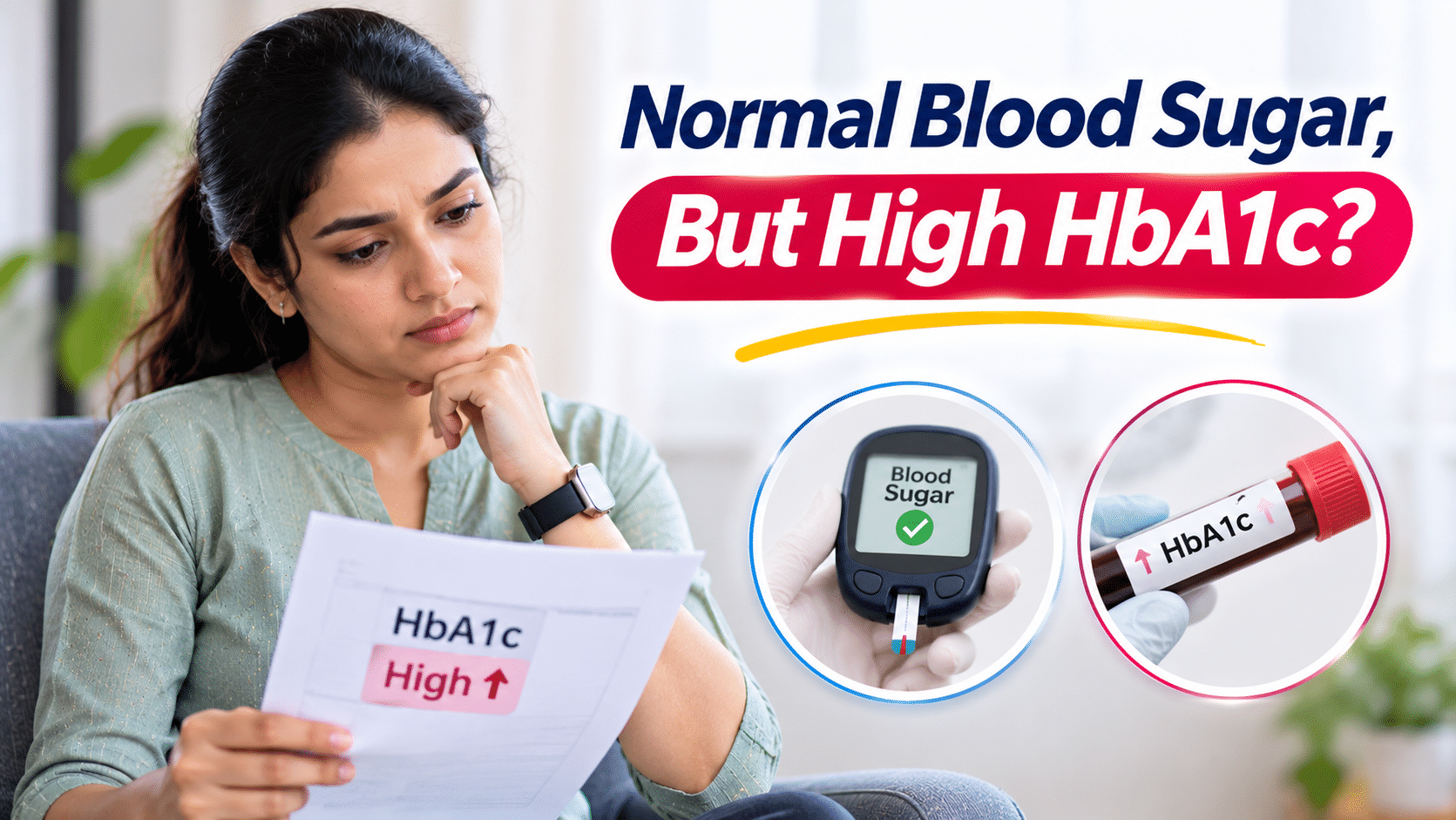
Normal blood sugar readings and a high HbA1c result can occur together because they measure glucose differently. A glucose test reflects your level at a particular moment, while HbA1c estimates your average over approximately three months. Consulting a specialist in diabetes in patiala can help identify whether missed glucose spikes, recent improvements or testing factors explain the difference.
Why Do Blood Sugar and HbA1c Differ?
Blood glucose changes throughout the day depending on meals, physical activity, stress, illness and medication.
A fasting test measures glucose after several hours without food. An HbA1c test reflects glucose exposure over a longer period through its relationship with haemoglobin in red blood cells.
Consequently, a normal fasting result does not necessarily mean glucose remained normal throughout previous weeks.
Understanding the HbA1c test results alongside daily measurements provides a more complete picture than relying on either test independently.
Can Sugar Rise After Meals?
Yes. Some people experience higher glucose levels after eating despite having normal fasting readings.
Meals containing carbohydrates can increase blood glucose. The size and duration of that increase depend on individual metabolism, food composition, activity and treatment.
Why Are Morning Readings Normal?
Fasting readings may appear acceptable because several hours have passed since the previous meal.
However, glucose may rise substantially after breakfast, lunch or dinner before returning towards normal.
How Can You Detect These Changes?
A clinician may recommend checking glucose at different times, including after meals, or using continuous glucose monitoring when appropriate.
A diabetes specialist in Patiala can help interpret these patterns without assuming that every temporary increase indicates uncontrolled diabetes.
Can Recent Improvements Explain High HbA1c?
Yes. HbA1c reflects previous glucose exposure, so improvements made recently may not immediately appear in the overall result.
Imagine someone who changes their eating habits and begins exercising regularly after several weeks of elevated glucose.
Their current readings may improve, while HbA1c still reflects earlier periods when glucose was higher.
This difference does not automatically mean the new routine is ineffective.
During blood sugar monitoring, clinicians consider when treatment or lifestyle changes began and whether the readings represent a sustained improvement.
Repeating HbA1c at an appropriate interval may help determine whether the longer-term trend is improving.
Can Anaemia Affect HbA1c Results?
Yes. Certain conditions affecting red blood cells can make HbA1c less reliable.
Iron-deficiency anemia may sometimes produce falsely elevated results. Other conditions, including certain haemoglobin variants, kidney disease, recent blood loss and blood transfusions, may also influence interpretation.
The direction of the effect depends on the condition and testing method.
When HbA1c test results differ substantially from glucose measurements, clinicians may investigate possible interference rather than immediately changing treatment.
Additional blood tests or alternative glucose assessments may be appropriate depending on individual circumstances.
What Do HbA1c Numbers Mean?
For many nonpregnant adults, standard diagnostic categories are:
- Below 5.7%: Normal range.
- 5.7%–6.4%: Prediabetes range.
- 6.5% or above: Diabetes range.
These thresholds help guide assessment but do not replace clinical judgement.
In people without clear symptoms, a result suggesting diabetes generally requires confirmation through appropriate testing.
A specialist in diabetes in patiala can explain how laboratory findings relate to symptoms, medical history and other investigations.
Importantly, diagnostic thresholds are different from individual treatment targets for people already living with diabetes.
Could Your Glucose Meter Be Wrong?
Home glucose meters are useful, but their readings can be affected by testing technique, strip condition and device limitations.
Unwashed hands, expired strips or incorrect storage may influence measurements.
Additionally, a home meter measures glucose at the time of testing, not continuously throughout the day.
During blood sugar monitoring, patients should follow device instructions and discuss unexpected readings with their healthcare professional.
If home measurements repeatedly disagree with laboratory findings, the clinician may compare testing methods and review the monitoring schedule.
What Happens in a Real Patient Situation?
Consider a hypothetical 48-year-old office employee in Patiala who checks fasting glucose every morning.
Most readings appear within the expected range. However, a routine laboratory test reports an HbA1c of 7.2%.
The patient feels confused because the home readings seem reassuring.
During consultation, the clinician reviews meal timing, testing habits, medical history and previous laboratory results.
Additional measurements reveal that glucose sometimes rises considerably after meals.
The clinician explains that fasting measurements alone did not capture these changes.
This example shows how diabetes management may require examining glucose patterns rather than relying on isolated readings. It does not mean every mismatch has the same explanation.
What Tests Might Help?
The next investigation depends on the degree of disagreement and the patient’s medical history.
Possible assessments include fasting plasma glucose, repeat laboratory HbA1c, an oral glucose tolerance test or structured glucose monitoring.
Continuous glucose monitoring may help identify patterns that occasional finger-prick tests miss.
If anaemia or a haemoglobin disorder is suspected, additional investigations may be considered.
A diabetes specialist in Patiala can determine which tests are appropriate and whether the original HbA1c measurement requires confirmation.
Patients should avoid changing prescribed medicines solely because two results appear inconsistent.
How Can You Improve Monitoring?
Effective monitoring involves recording enough information to understand glucose changes over time.
Helpful practices include maintaining a record of glucose readings, meal timing, medication use, physical activity and unusual symptoms.
Follow the testing schedule recommended by your clinician rather than measuring randomly.
During diabetes management, these records can help identify recurring patterns and assess whether existing treatment remains appropriate.
Patients can also discuss diabetes-related care and available services through the hospital website.
Conclusion
Normal blood sugar readings and elevated HbA1c levels can occur together because these tests measure glucose over different periods. A fasting reading captures one moment, while HbA1c reflects average glucose exposure over approximately three months. Higher readings after meals, recent lifestyle improvements, or certain blood conditions may explain the difference.
Understanding HbA1c test results requires examining daily glucose patterns, medical history, medications, and possible testing limitations. A normal home reading should not automatically outweigh an unexpectedly high laboratory result.
Consulting a specialist in diabetes in patiala can help identify whether after-meal glucose spikes, iron-deficiency anemia, or other factors require further investigation. A specialist in diabetes in patiala may recommend repeat laboratory testing or structured blood sugar monitoring before deciding whether treatment adjustments are appropriate.
Effective diabetes management also involves balanced meals, regular physical activity, prescribed medication when needed, and timely follow-up. Keep a record of glucose readings and discuss any unusual differences with your clinician.
Ultimately, a specialist in diabetes in patiala can interpret both measurements together, helping you make informed decisions without unnecessary worry or changes to treatment.
Frequently Asked Questions
1. Can HbA1c Be High With Normal Fasting Sugar?
Yes. HbA1c test results may reflect previous elevations or after-meal glucose increases that fasting measurements do not capture.
2. Should I Repeat My HbA1c Test?
A clinician may recommend repeating the test when results are unexpected or require diagnostic confirmation. A specialist in diabetes in patiala can assess whether additional testing is necessary.
3. Can Stress Affect Blood Sugar?
Yes. Physical or emotional stress can influence glucose levels. Consistent blood sugar monitoring may help identify changes associated with stressful periods.
4. Does High HbA1c Always Mean Diabetes?
No. Interpretation depends on the result, confirmation requirements and possible testing interference. Appropriate diabetes management begins with an accurate assessment rather than assumptions.
5. Can HbA1c Improve Without Medication?
Lifestyle changes can improve glucose control in some individuals. However, treatment requirements vary, and prescribed medicines should never be stopped without medical advice.
6. When Should I Consult a Diabetes Specialist?
Consult a specialist in diabetes in patiala when HbA1c and glucose readings repeatedly disagree, results are concerning or you need help understanding your treatment plan.